
Understanding the Role of Aadhaar Card for NRIs, OCI Cardholders, and Foreign Residents
With India’s growing global footprint and increasing engagement with its diaspora, identity documentation like the Aadhaar card has become an essential part of navigating the country’s financial, legal, and administrative systems. However, for Non-Resident Indians (NRIs), Overseas Citizens of India (OCIs), Long-Term Visa (LTV) holders, and other foreign nationals, understanding Aadhaar’s applicability can be complex and often confusing.
This article provides a comprehensive guide to the role of Aadhaar in the lives of NRIs, OCI cardholders, and resident foreigners. From eligibility criteria and enrolment procedures to its usage for PAN, TAN, and financial compliance, we break down everything you need to know. Whether you’re planning a return to India, investing in Indian assets, or simply trying to stay compliant with Indian regulations, this guide will help you navigate the Aadhaar landscape with clarity and confidence.
What is an Aadhaar card?
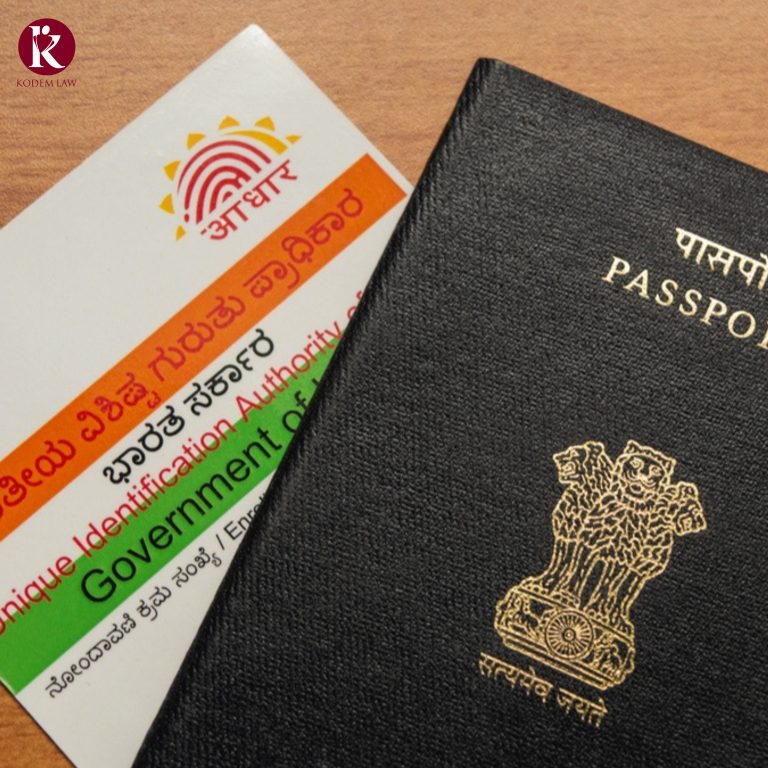
The Aadhaar card is a unique identity card issued by the Government of India. It contains a 12-digit number linked to your biometric and personal details. Aadhaar helps you access government services, bank accounts, and subsidies, making the system more transparent and reducing fraud.
An Aadhaar card is not proof of Indian citizenship and does not grant any foreigner the right to stay in the country if they are non-compliant with other requirements. If you do not have your original Aadhaar card with you during any transaction or procedure, you can use your Aadhaar letter, e-Aadhaar, or m-Aadhaar profile as ID proof. While the Aadhaar card is a comprehensive document, one cannot solely rely on it to enjoy all services. Authorities carry out additional verifications to prevent any discrepancies.
Aadhaar Eligibility for NRIs, OCI Cardholders, and Foreign Nationals
1. For OCI Cardholders:
- Must have stayed in India for at least 182 days in the 12 months immediately preceding the enrolment date.
- Must have an Indian address.
2. For NRIs (Non-Resident Indians):
- NRIs are eligible only if they have stayed in India for at least 182 days in the last 12 months.
- A valid Indian passport is required for enrolment.
- NRIs, whether minors or adults, can apply at any Aadhaar Kendra using a valid Indian passport as proof of identity (PoI).
- If an NRI’s passport includes their spouse’s name, it can serve as proof of address (PoA) for the spouse.
Spouse’s Aadhaar enrolment requirements:
- NRI spouse: Valid Indian passport is mandatory as PoI.
- NRIs cannot register international or non-Indian mobile numbers in Aadhaar.
- If the address in an NRI’s passport is outdated, a different Indian address can be provided during the application, supported by valid proof of address (PoA) documents as listed by UIDAI.
3. For LTV (Long Term Visa) Holders:
- Eligible if belonging to minority communities from Pakistan, Afghanistan, or Bangladesh (Hindus, Sikhs, Buddhists, Jains, Parsis, Christians) and meeting the stay requirement.
4. For Nationals of Nepal and Bhutan:
- Eligible with a valid passport or other relevant documents.
5. For Resident Foreigners:
- Must have stayed in India for more than 182 days in the last 12 months.
Must hold a valid Registration Certificate or Residential Permit issued by FRRO/FRO, unless they are:
- OCI cardholders.
- LTV holders.
- Nationals of Nepal or Bhutan.
Aadhaar for Children of NRIs
• Children below 5 years of age:
(i) One of the parents/ guardians has to authenticate on behalf of the child and also give consent for the enrolment of the minor by signing the enrolment form.
(ii) If the child is an NRI, a valid Indian passport of the child is mandatory as Proof of Identity (PoI)
(iii) If the child is an Indian resident (not NRI), any valid Proof of Relationship document, such as a Birth Certificate, along with Aadhaar of the parent/ guardian, can be used for enrolment.
• Children between 5 to 18 years of age:
(i) One of the parents/guardians has to give consent for the enrolment of the minor by signing the enrolment form.
(ii) If the minor is an NRI – a valid Indian passport of the child is mandatory as Proof of Identity (PoI)
(iii) If the minor is an Indian resident (not NRI) –
- No document in the name of the minor: any valid Proof of Relationship document, such as a Birth certificate, can be used for enrolment under Head of Family.
- Minor has a document: use a valid Proof of Identity (PoI) and Proof of Address (PoA) document (like a School ID card) in the child’s name for enrolment
Aadhaar Validity, Usage, and Key Benefits for NRIs, OCIs & Foreign Residents
1. Validity
- Aadhaar issued to resident foreigners is valid only for the duration of their visa.
- Nepalese and Bhutanese nationals receive Aadhaar with a validity of up to 10 years.
- Aadhaar for OCI cardholders is valid for 10 years.
- For LTV document holders, Aadhaar remains valid until the expiry of the LTV document.
- Aadhaar issued to NRIs with Indian passports is valid for life, just like for resident Indian citizens.
2. Usage and Alternatives
- NRIs are not required to link Aadhaar to their bank accounts unless seeking benefits under Section 7 of the Aadhaar Act.
- If the physical Aadhaar card is unavailable, e-Aadhaar, Aadhaar letters, or the mAadhaar app can be used as valid identification.
- PAN card + passport is a valid alternative for most financial, KYC, and tax processes for NRIs.
- OCI cardholders and foreign nationals can use passport, visa, OCI card, and residency permit as alternative ID proofs.
- Aadhaar is not required for OCI cardholders or foreigners for most services unless they qualify as residents under UIDAI guidelines.
3. Key Benefits
- Aadhaar simplifies KYC procedures for banking, investments, telecom, and property transactions in India.
- It is widely accepted as proof of identity across government and private institutions.
- Aadhaar helps NRIs applying for government jobs or services in India meet ID requirements easily.
- Under Section 139AA, Aadhaar is required for filing Income Tax Returns if the individual is a resident or holds Aadhaar.
For long-term NRIs, Aadhaar enables easier access to Indian digital platforms like DigiLocker, eSign, and DBT schemes
How Aadhaar Helps with PAN and TAN?
1. Mandatory Linking of Aadhaar with PAN (If Tax Resident in India)
- Foreign nationals, including NRIs and OCIs, who qualify as residents for tax purposes under Indian law (i.e., stay in India for 183 days or more during a financial year) are required to obtain Aadhaar.
- In such cases, the Income Tax Department mandates linking Aadhaar to PAN under Section 139AA to file Income Tax Returns (ITR) and to prevent PAN deactivation.
- This linking also enables e-verification of tax returns, reducing paperwork and delays.
2. Facilitates PAN Application (For Eligible Aadhaar Holders)
- Aadhaar can be used as a valid proof of identity and address when applying for a PAN card, especially useful for eligible foreign residents or NRIs who already have Aadhaar.
- For Indian residents, PAN can be issued instantly online using Aadhaar-based e-KYC.
3. Digital Aadhaar Accepted as ID (e-Aadhaar / mAadhaar)
- In most processes involving PAN—like updates or reissuance—digital Aadhaar formats (such as e-Aadhaar PDF or the mAadhaar app) are accepted as valid identity documents, subject to the authority’s guidelines.
4. Support in TAN (Tax Deduction Account Number) Application
- While Aadhaar is not mandatory for TAN, it can be useful when an individual (e.g., proprietor or professional) is applying for TAN online.
- Aadhaar helps in e-verifying the TAN application, speeds up approval, and can serve as supporting ID.
Limitations and Considerations
1. Residency Requirement
- Only individuals who have stayed in India for at least 182 days in the past 12 months are eligible to apply for Aadhaar.
- NRIs with Indian passports can apply immediately upon arrival, as per the amended Aadhaar (Enrollment and Update) Rules, 2020.
- OCI cardholders and foreign nationals must meet the 182-day condition unless specified otherwise.
2. Limited Validity for Foreign Nationals
- Aadhaar issued to resident foreign nationals is valid only up to the expiry of their visa or residency document.
- For Nepalese, Bhutanese nationals, and some OCI holders, Aadhaar is valid for up to 10 years.
- Changes in visa/residency status may require Aadhaar updates or cancellation.
3. Not a Proof of Citizenship
- Aadhaar is an identity number, not proof of Indian citizenship or immigration status.
- Holding Aadhaar does not entitle the holder to rights like voting or government jobs unless other eligibility criteria are met.
4. PAN–Aadhaar Complications
- Linking PAN with Aadhaar is mandatory for Indian tax residents; however, NRIs and OCIs may face automatic PAN deactivation if Aadhaar is not linked, even if they’re exempt.
- This often requires manual clarification with the Income Tax Department.
5. Exclusion from Certain Services
- Some services and schemes (like welfare subsidies) tied to Aadhaar under Section 7 are not available to non-residents.
- e-KYC using Aadhaar OTP may not be available for foreign SIMs or overseas users.
How Can Kodem Law Help You?
Navigating the Aadhaar system as an NRI or foreign national can be complicated. Kodem Law, a leading global law firm specializing in Indian immigration and documentation, offers personalized guidance and legal support for:
- Aadhaar enrollment and document verification
- PAN–Aadhaar linking for NRIs and tax residents
- Resolving PAN deactivation issues
- Helping LTV and OCI holders comply with UIDAI requirements
- Legal representation with FRRO/FRO for visa/Aadhaar updates
- Support for Aadhaar-based financial and property transactions
Whether you’re a returning NRI, an OCI cardholder investing in India, or a foreign professional with long-term plans in the country, Kodem Law ensures you’re fully compliant and empowered.
📞 Book a consultation today to get expert help for Aadhaar, PAN, and related legal documentation.

Frequently Asked Questions
Q1: Can I get an Aadhaar as an OCI cardholder?
Yes, if you’ve lived in India for 182+ days in the past year and provide a valid Indian address.
Q2: Is Aadhaar mandatory for NRIs?
Only if you’re a tax resident of India or availing government benefits under Section 7 of the Aadhaar Act.
Q3: Can Aadhaar be used to apply for PAN?
Yes. Aadhaar is accepted as a valid ID for PAN application.
Q4: Do foreign SIMs work for Aadhaar OTPs?
No. Only Indian mobile numbers can be registered with Aadhaar.